Pensioner poverty on the brink of another cost-of-living crisis

Poverty on the eve of a crisis
‘My home being cold depresses me. It makes me feel ashamed. It makes me angry.’
This is what someone told Age UK in our research on the cost of living. Polling from January paints a worrying picture for ‘pensioners’ (66+). Many are cutting back on the basics needed for a healthy, secure life, as seen in our report Fragile Budgets, Difficult Choices. For example:
·35% have had to cut back on heating or powering their home.
·35% have had to cut back on social and leisure activities.
·20% have had to cut back on food or other groceries.
More generally, 3 in 10 (28%) said they are struggling financially. Of these, half (47%) have been struggling for 3+ years – that’s 1.6 million people.

This data is a good gauge of poverty. Looking at a range of measures, well over a million pensioners are in financial hardship.
What does pensioner poverty look like?
What people say gives a good picture of the reality. This quote is from a man is his early 70s. It shows some common experiences – struggling with the cost of energy, being in a cold home, not having decent food, and being unable to get out and about.
‘I now have to be very budget conscious and only buy the cheapest food. I have had to cut the central heating in my rented house to save money… I can only afford to use my car when absolutely necessary, which is a pain, as I live in a rural part of the country... I can only afford to shower once a week, or once a fortnight. Every month is a battle to make ends meet… I have to wear multiple layers of clothing, hats and scarves while at home to stay warmish, and use multiple duvets on my bed at night. I have contracted colds and flu several times as a result. My life these days is perpetually shivering.’
Poverty harms people’s social lives. Another person said:
‘I’m depressed trying to keep warm, wrapped in many clothes and blankets. I’m embarrassed to ask friends round, the house is too cold for elderly friends.’
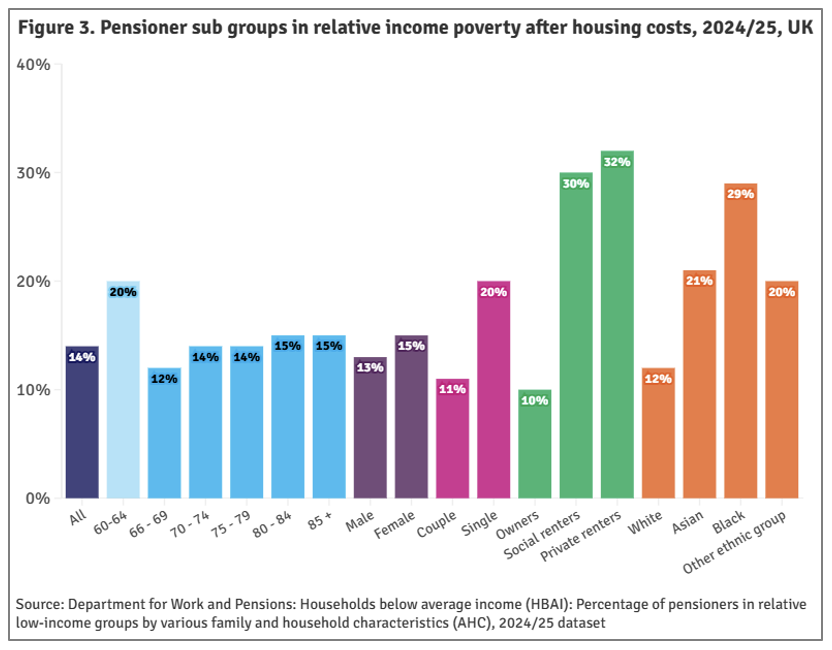
Some groups are more at risk. These include renters, single people and people from ethnic minority backgrounds, as shown in the chart.
How is poverty changing over time?
Pensioner poverty fell from a high of ~30% in the mid-1990s to a low of 13% around 2012. It has crept back up a bit in the last 10 years, as the chart shows. (‘Below 60% of average income’, in navy, is the key poverty line.)
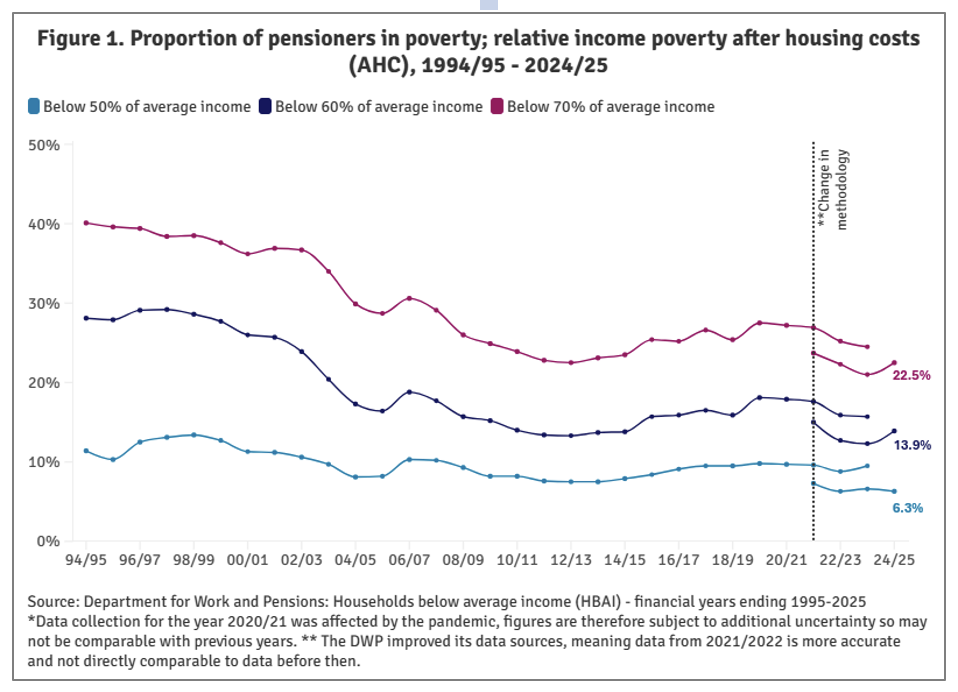
The dramatic improvement from 30 years ago can lead to complacency. But between 2012 and 2022 we’ve seen an extra 500,000 people in poverty.
Things could get worse in future, for a few reasons:
· More people renting through retirement. The number of people ageing in the private rented sector could more than triple over the next 20 years, with 17% of older people forecast to be privately renting by 2042.
· People not able to save enough into private pensions. The Government said ‘nearly 15 million working-age people are not on track to have an adequate retirement income’ when launching the current Pensions Commission.
· The State Pension age rising to 67 and then 68. People who can’t work up to these older ages risk waiting out their mid-60s in poverty, with worsening health and using up any savings they have.
This shows the importance of a decent State Pension as a reliable income for everyone – now and in future.
The coming crisis?
We are also worried about the short term. Energy prices rose by 13% in July – around £200 on average – and continue to be volatile. This winter could be another cost-of-living crisis.
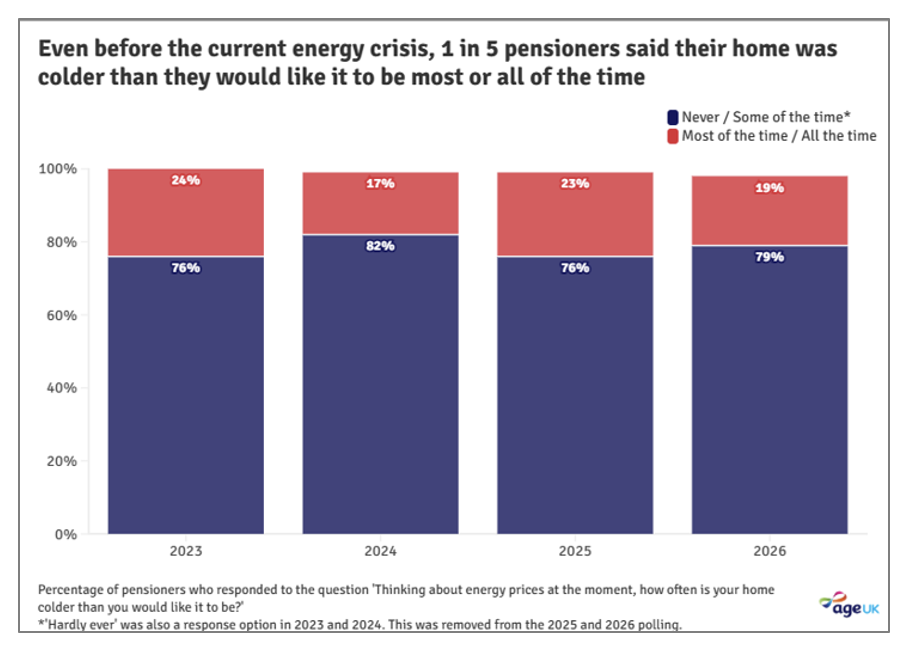
The polling from January shows how people were doing even before prices started rising. If 19% felt their home is too cold all or most of the time then, how many will feel that way this winter, when prices will be hundreds of pounds higher?
How should Government policy respond?
People and families of all ages will need crisis support this winter. But how should the Government support older people specifically?
1) Increase benefit take-up
Around 1 million people are not receiving the Pension Credit they are entitled to. It is the main means-tested benefit for pensioners, bringing their income up to around £12,400 per year and linking to other support, including help with energy bills. Action to get more people this important entitlement (and others) would help.
2) Improve existing energy support schemes
For example, the Warm Home Discount scheme – £150 off electricity bills – should be open to a wider group of people and through different routes.
3) Ensure local authorities deliver crisis support well
Local authorities (LAs) have new funding through the Crisis & Resilience Fund to support people in a sharp crisis but also build their longer-term resilience. This is welcome but LAs must ensure this support is accessible to older people, who often miss out on this kind of help.
Parliament looked at pensioner poverty last year through a Work and Pensions Committee inquiry. That was a timely review of an issue that has been slowly growing and could become worse in the coming months and years.