Food Insecurity: Voices from the Foodbank
Food insecurity is rising across the UK, placing increasing pressure on individuals, families, and communities. National data shows that more than one in ten households struggle to afford or access sufficient food, with households with children disproportionately affected. Recent figures also indicate that food insecurity has more than doubled since 2021, while the number of people turning to food banks continues to grow each year. These pressures are closely linked to wider structural inequalities, including low income, disability, insecure work, and rising living costs. At the same time, many of the impacts of food insecurity remain hidden, with shame and stigma often associated with food bank use.
Within this context, the Food Insecurity: Voices from the Foodbank project brings the experiences of food bank users to the forefront. The aim of this blog is to present research findings from our collaboration with the Equitable Place-Based Health and Care theme (EPHC–ARC NWC) and highlight the importance of these issues, while deepening understanding of how food insecurity affects physical and mental health and what may help to reduce its negative impacts.
The research set out to explore how individuals accessing food banks perceive food insecurity as shaping their own and their families’ daily lives, to understand its impacts on health and wellbeing, and to identify what might mitigate these effects. Data collection took place between January and March 2025 and involved interviews with food bank users across three food banks in the North West of England, alongside a workshop where participants reviewed and reflected on emerging findings.
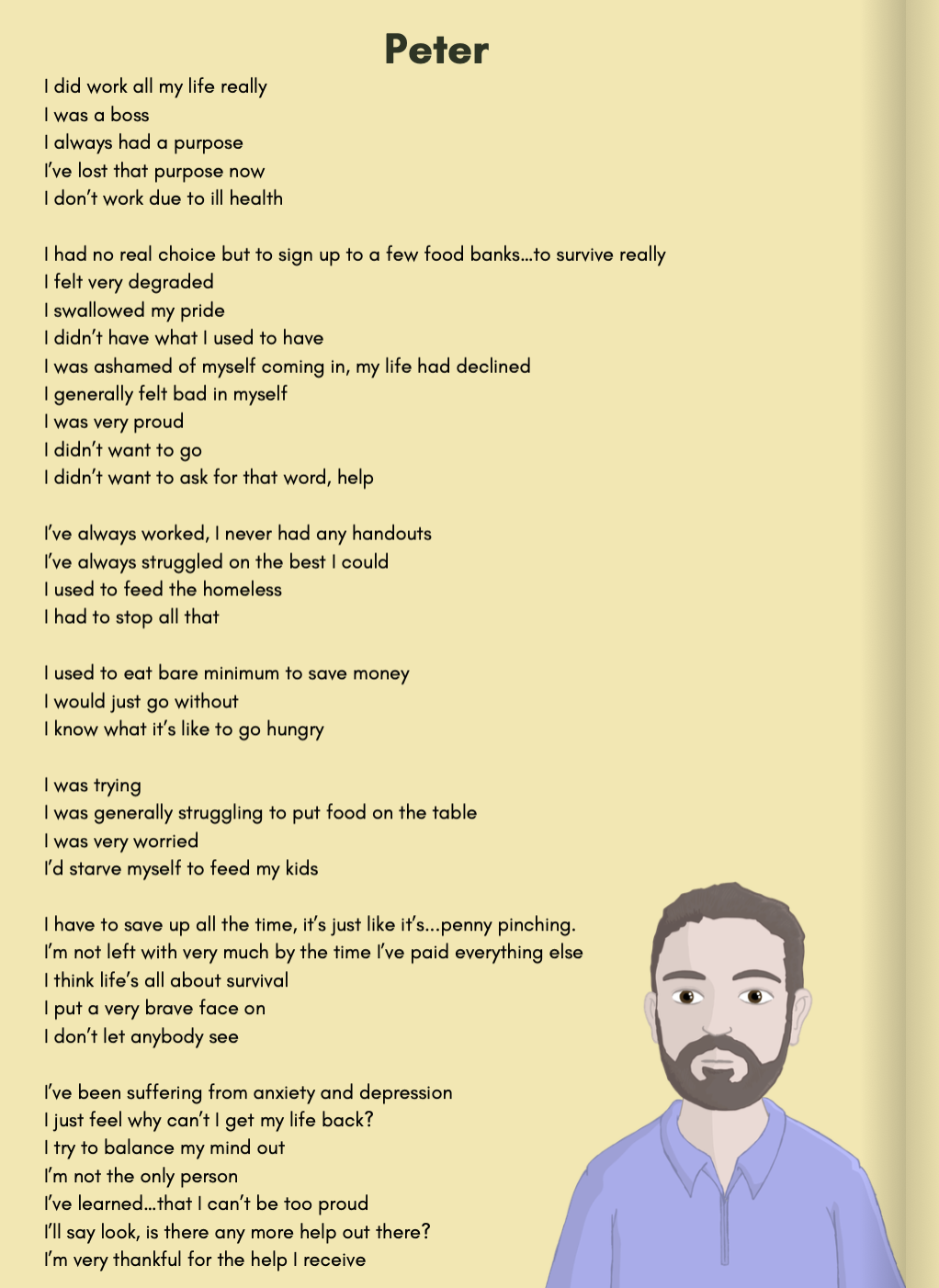
The research team adopted a creative approach to presenting the data alongside more traditional research outputs (Research Report). This included the creation of six I-poems (Flip Book) derived from participant interview data. The I-poem methodology is rooted in the principles of the Listening Guide, a method that focuses on listening closely to how people speak about themselves. They allow the reader to hear participants’ voices more directly.
I- poems
The I-poems centre participants’ voices, using their “I” statements to show how individuals describe themselves and the situations shaping their everyday lives.
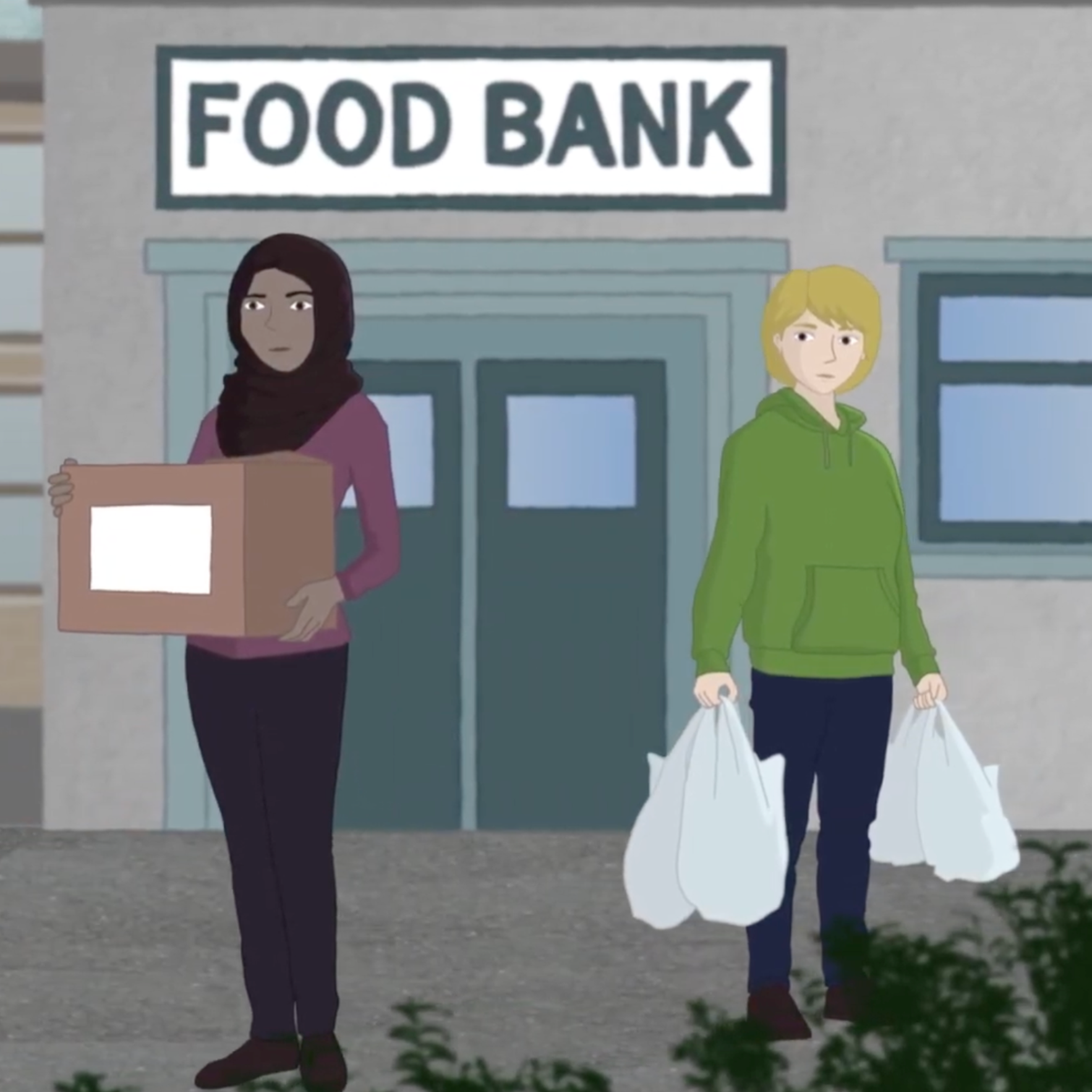
Two animations were also co-produced with food bank users. The first animation, Voices from the food bank: Food Insecurity and its impacts, provides an animated summary of the report’s findings, illustrating the detrimental impacts that food insecurity can have on the lives of food bank users.
The second animation, Voices from the food bank: Living with food insecurity, adapts content from the six I-poems to bring lived experiences to life and highlight the emotional impacts and challenges faced by those living with food insecurity.
Koser Khan, the lead researcher based at the University of Lancaster, noted: “Many of the participants involved in the project had never taken part in research before. Their involvement enabled them to help shape how their experiences were interpreted and shared with others.”
Working in this more creative and co-produced way not only ensures that lived experience shapes research and its outputs, but also brings benefits to those who take part. As participants themselves described, the process had a meaningful personal impact.
One female participant reflected on how the project shaped her sense of connection and confidence, saying: “It has built my confidence, I am not alone, hearing everyone else’s story. I have not been involved in research before, and it has been a good experience. I found it a great help, made me realise not going through it alone and can reach out for help. I now feel it is okay to seek help being with this group of people, I feel more comfortable within myself and now feel there is nothing wrong with going to foodbank… anyone should go and not feel no shame.”
Similarly, a male participant described how being involved in the research helped him reflect on his own experiences and those of others: “I joined the research group to try and explain what sort of things happen to people about not having money or enough food to manage though. I started my journey when my health declined I was used to working my way out of my problems and it has transformed the way I think feel and act it has been very rewarding project and I have got so much out of it as a person and listening to others who were having difficulties like myself. The videos explain how and why people struggle and is very hard hitting because these are real people with real feelings. So glad I became part of it ... .”
Together, these reflections highlight the value of co-produced research approaches that not only generate richer insights but also create meaningful space for participants’ voices and experiences to be heard.
These research findings were first published here.
For more information about the study, please contact info@pran.org.uk