Out in the Cold: 7 Ways to End UK Fuel Poverty
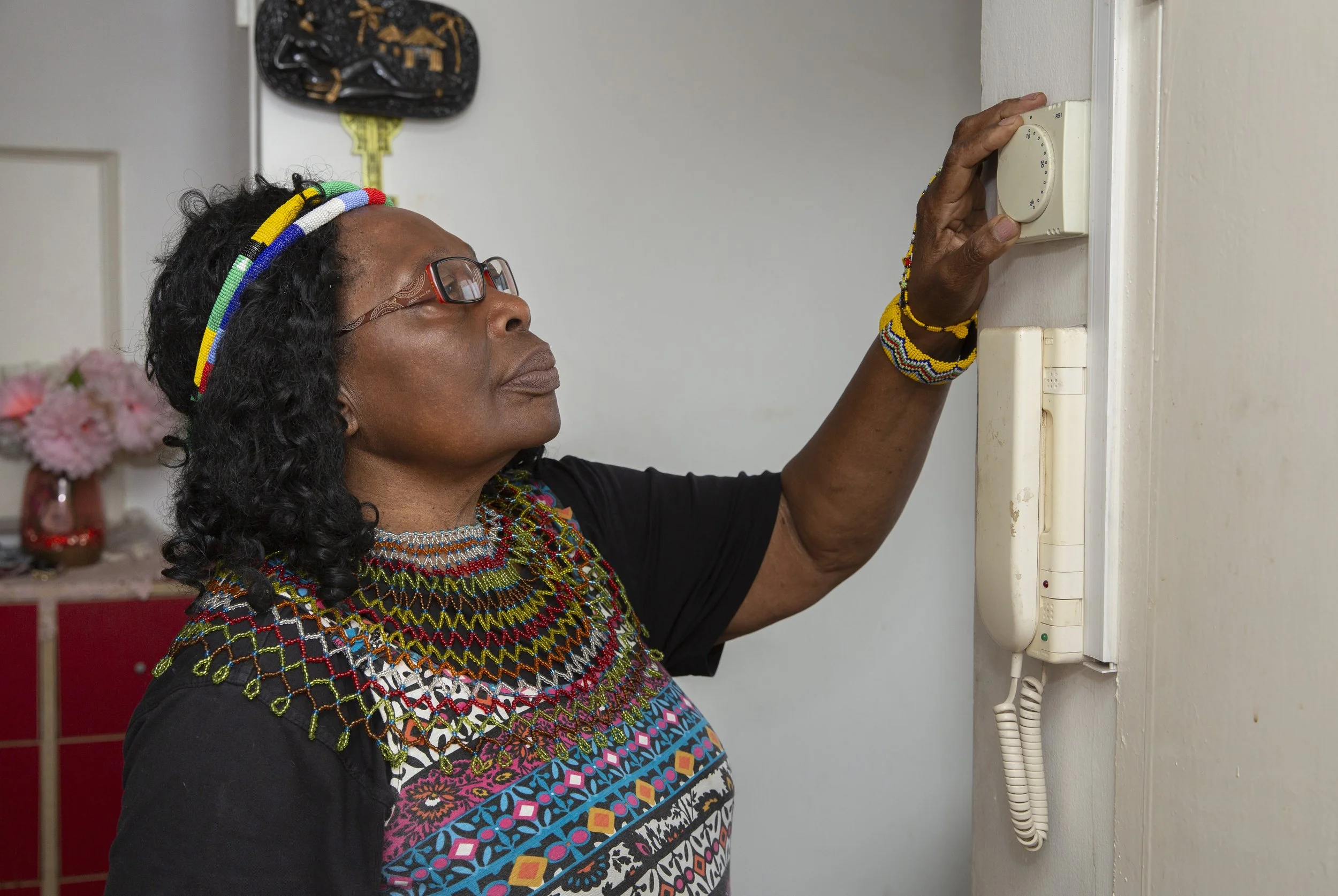
Photo Credit: Independent Age/Leanne Benson
“We don’t use the cooker or the toaster because they use too much energy… we’re cutting down on washing and not washing as much as we used to.”
“I’m anxious because if the bills are already just about manageable, what on earth will happen when they grow even higher in the coming months?”
“Every month is a battle to make ends meet. I have to wear multiple layers of clothing, hats and scarves while at home to stay warmish.”
These are real-life testimonies from just three of the 12.1 million households in the UK who are currently living in fuel poverty. Yet with the price of gas recently reaching its highest level in four years, energy debt hitting record-breaking levels and experts predicting another staggering energy bill increase come January, this crisis could soon reach a fresh tipping point.
And it could do so right in the middle of winter, a time when the inability to heat our homes can prove fatal for some.
By definition, fuel poverty is when a household is unable to heat or cool their home to a safe temperature. It’s caused by a combination of high fuel prices and low household income, compounded by poor home energy efficiency and high-cost, low-quality housing. While technical definitions of how to calculate fuel poverty vary across England, Scotland, Wales and Northern Ireland, a traditional measure is that a household is considered to be in fuel poverty if it spends 10% of its income on energy costs.
Such is the current fuel poverty crisis that around 1 in 5 households, roughly five million across the UK, are currently spending 20% of their income on energy.
While energy costs have taken a dramatic upward turn since February owing to the US-Israel war with Iran, the UK’s current fuel poverty emergency has been years in the making.
Average energy bills are currently around 79% higher than they were in winter 2020/21, with the biggest driver being the cost of gas. The UK is overexposed to volatile international fossil fuel markets for our energy, markets which experience price shocks every time there is a conflict like the one ongoing in the Middle East.
While UK households are forced to absorb these huge shocks through their energy bills, the energy industry makes excessive profits from the price spikes. Thirty energy companies have made over £125 billion in profit on their UK operations since 2020; since the start of the war in Iran, a handful of energy firms have posted £6 billion in UK profits. According to this year’s Sunday Times Rich List, just 15 energy industry-linked individuals are worth £72.3 billion – a year-on-year increase of £2.83 billion.
Since the price shocks caused by the Russia-Ukraine war, the UK has not done enough to move households off the fossil fuel rollercoaster and onto clean, homegrown renewable energy, nor to support households to improve their home energy efficiency. We remain susceptible to market disruption, hence why the conflict in Iran has once again caused energy bills to go through the roof: gas unit rates are currently 27% higher than last winter and 150% higher than the end of 2020. With tensions in the Middle East showing no signs of easing, this could get worse still.
The difference this time around is that families are still reeling from the impact of the Ukraine-Russia price shock, which pushed millions into energy debt and saw the cost of living soar. Research by the Coalition revealed that 1 in 3 consumers are currently in or on the brink of falling into energy debt. While summer can sometimes be a period for families to clear energy debt or build up reserves ahead of winter, this year’s extreme heat has caused millions to use more energy than usual cooling their homes. A third of people report using more energy this summer.
These are statistics, but there are real people behind the numbers. Like Sarah, the single mother who has had to stop using her kitchen appliances to save energy. Or Mal, the pensioner wearing a coat, hat and scarf indoors so he doesn’t have to put the heating on. Then there’s John, who does put his heating on, but skips meals to ensure he has enough money to do so. *Names have been changed.
Many others are doing the same: our research has shown that 1 in 5 people in energy debt are skipping meals or using food banks, while worryingly, a quarter owe money to someone who makes them feel scared. The health implications are stark, too; 1 in 5 adults say that being in energy debt has impacted their mental and/or physical wellbeing.
With the autumn Budget approaching, this is how the government can change the course of the UK’s deepening fuel poverty crisis.
1. Write off energy debt
Households have no hope of managing exceedingly high energy costs if they are forever trying to escape energy debt. Energy crisis arrears should be written off, with households on means-tested benefits automatically eligible. This could be funded by the £6 billion in excess profits which Citizens Advice found has given to energy network companies over recent years.
2. Increase the Warm Homes Discount
The Warm Homes Discount must be extended and enhanced to match the current cost of energy. £150 off electricity bills does not reflect the current scale of the crisis facing families, and the payment should therefore be increased and adjusted in line with inflation, as well as being provided to more households that need it.
3. Introduce extreme weather payments
This year was the hottest summer on record, and families have struggled to afford to keep cool. This led to almost 3,000 heat-related deaths in May and June alone, and 15 million people being left unwell. Cold Weather Payments should be replaced with Extreme Weather Payments to account for dangerous weather conditions on both ends of the scale.
4. Easier access to bill support and home upgrades
Campaigners have long called for a referral path which allows social workers, debt advisers and health professionals to refer households into bill support or for home energy efficiency upgrades.
5. Long-term funding for a social tariff
A social tariff would deliver targeted support for older, disabled and low income households, who are often the most vulnerable to fuel poverty. The tariff should also extend to households in energy debt.
6. Lower the cost of electricity
The prime minister's announcement that VAT on electricity bills would be cut is a welcome one. However, it is only set to be in place until the end of March 2027, and with Ofgem’s price cap expected to rise substantially between now and then, any benefit will be more than wiped out. Andy Burnham must commit to extending the VAT cut beyond March, alongside other measures to make electricity cheaper. These measures should include moving electricity bill levies – including the Renewables Obligation, the Feed in Tariff, the nuclear levy and the Warm Home Discount – onto general taxation, and breaking the link between electricity prices and volatile gas markets for good.
7. Retain the Energy Profits Levy (Windfall Tax)
The energy industry makes billions in profit every few months in the UK alone, and the Energy Profits Levy is an essential means of ensuring some of that windfall profit is redirected towards struggling consumers. It must be retained, while any successor mechanism should raise revenue at a comparable level.
*Case study names changed. Case studies collected by National Energy Action and Age UK.