Welcome to Early Career Forum Month! This is the second post in a special blog series sharing insights from PRAN’s early career forum members. The forum is designed to support and connect emerging scholars, professionals, and practitioners working in the areas of poverty, inequality, and social justice.
I work at Newcastle City Council's in the Fair and Healthy Childhood team, where my primary focus is improving the health and wellbeing of children and young people aged 5 to 19 years.
I currently lead on the rollout and dissemination of the Health-Related Behaviour Questionnaire (HRBQ), a bi-annual survey delivered in partnership with the School Health Education Unit (SHEU). The survey has been running in Newcastle since 2011 and it gathers pupils' views and experiences relating to their health and wellbeing.
The HRBQ is a self-reported anonymous survey which is completed by pupils in Year 4, Year 6, Year 8 and Year 10. It covers a wide range of topics, including drugs, alcohol and tobacco, emotional health and wellbeing, healthy eating, physical activity, relationships and sexual health, safety, and experiences of school. The HRBQ and the workstreams that have progressed from the survey has highlighted the importance of youth participation.
Newcastle is a young city, and young people are our future. They have a right to share their views, concerns, and experiences related to their health and wellbeing. The Health-Related Behaviour Questionnaire (HRBQ) provides an important platform for them to do so.
Working on the HRBQ has opened my eyes to what true co-production is. True co-production is not a tick-box exercise. It is about genuinely listening to young people, understanding their experiences, and using their insights to shape decisions and services. Young people have different needs to adults, and the challenges that they face are often complex and can have a significant impact on their development and adulthood. This is where the HRBQ is a valuable tool to helps us identify local issues that matter most to young people and ensuring that services and interventions are informed by their voices.
Youth co-production extends beyond the HRBQ itself. Young people play a vital role in holding us accountable for the work we do. For example, the Youth Council are consulted on Public Health's priority areas to ensure that the issues we focus on reflect the needs, concerns, and aspirations of young people across the city.
This commitment to embedding youth voice can also be seen in the menstrual health pilot. The pilot focuses on reducing school absences due to periods. The pilot is being delivered by Action for Children and supported by the menstrual health task and finish group. As part of this funded programme, the voices and experiences of young girls have been central to the design and delivery of the pilot, ensuring that the work is relevant, meaningful, and responsive to their needs.
As we prepare for the dissemination of the 2026 HRBQ results, we are placing a strong emphasis on embedding youth voice throughout the process and ensuring that the findings are accessible and meaningful to young people. To better understand how they would like to engage with the results, research was undertaken with school-aged children.
This research focused on working collaboratively with school aged children to co-create materials and approaches that they could easily understand and relate to. By doing so, we are ensuring that young people are not only represented in the data but are also active partners in how the findings are communicated and used to drive positive change. This research exercise taught me how to work collaboratively with young people and showed me how to do effective and interactive research with young people.
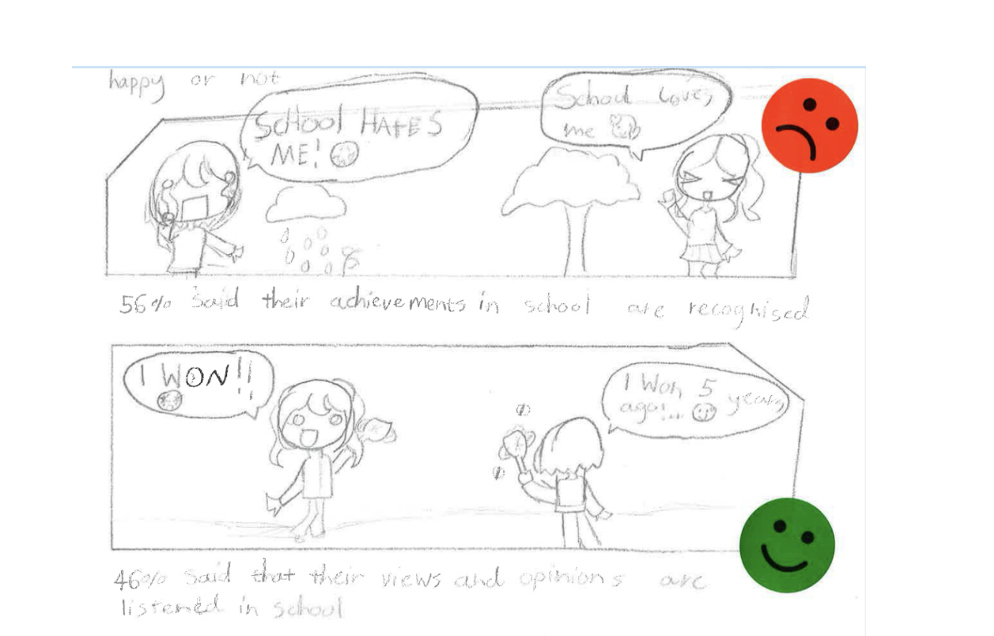
A drawing done by a year 4 child to illustrate how they would like to see the HRBQ results
The HRBQ has highlighted to me the importance of embedding youth voice in public health and has provided valuable insight into the challenges that many young people are facing in today's world. The findings taught me that young people want the opportunity to talk about their health and wellbeing, and that they genuinely care about the issues affecting their lives and futures, they just need a platform to do so.
One of the greatest challenges I have encountered through my career is gathering youth voice that does not involve adult intervention to ensure that young people can share their views directly. I have learnt that too often, engagement with young people is mediated through adults, which can create barriers to hearing their authentic experiences and perspectives. The HRBQ provides a unique opportunity for young people to express themselves independently, without the influence or interpretation of adults.
By creating a safe and accessible platform for young people to share their thoughts, the HRBQ enables us to gain a clearer understanding of their needs, concerns, and priorities. This not only strengthens the evidence base for decision-making but also ensures that young people's voices are at the heart of the work we do to improve health and wellbeing outcomes across the city.
Looking ahead, I would like to broaden the reach of the survey and ensure that it better captures the experiences of all children and young people across Newcastle. In particular, we want to increase participation among pupils attending Special Educational Needs and Disabilities (SEND) schools, Pupil Referral Units (PRUs), and children who are currently not in education. These groups are often underrepresented in research and going forward I want to make sure that their voices are heard.
This gap has highlighted that there is more work to be done to ensure that all voices are heard. It reinforces the importance of involving diverse groups of young people in the development and design of the questionnaire itself, rather than making assumptions about what works best for them.
At its core working with young people has reinforced the importance of every child has the right to express their views, free from judgement, stigma, or barriers to participation. Youth voice is not simply about engaging with the young people who are already confident or willing to speak out. It is about creating meaningful opportunities for all children and young people, particularly those whose voices are less often heard.
By strengthening our approach to inclusive engagement, we can ensure that the HRBQ continues to be a powerful tool for understanding the needs of young people, reducing inequalities, and informing services that support better health and wellbeing outcomes for everyone.