
Hero by Day, Invisible by Night: The Paradox of Invisible Poverty and the Need for Government Action
Indie Jankowski is a student paramedic who recently started working in the National Health Service, but she has been struggling financially since her grandmother died. Indie lived with her grandmother, who was eligible for welfare support, including housing support. Since her death, Indie was evicted from the home she shared with her grandmother because she was not eligible for any financial support and therefore could not afford to stay in that home. During the day, Indie is a hero saving lives. At night, she sleeps under a bridge because she cannot afford rent.
Seriously! Is this fiction?
Yes, it is fiction. An uncomfortable fiction from an episode of Casualty on the BBC in March 2025. This uncomfortable fiction reflects the current state of poverty in the UK. Department for Work and Pensions data show that 11.6 million people were in relative poverty before housing costs and 14.2 million in poverty after housing costs (Francis-Devine, 2024; Joseph Rowntree Foundation, 2026). 7.9 million of the people in poverty (14.2 million) are working-age adults, and 6.8 million live in deep poverty, which means they had an income significantly below the poverty line (Joseph Rowntree Foundation, 2026). This data shows that people in poverty are earning an income, albeit a relatively low one, compared to their housing costs. Therefore, the nature of poverty is not those out of work, but rather those in work contending with the gap between income and living costs.
Invisible Poverty
Invisible poverty (also referred to as hidden poverty or hidden hardship) is concerned with the financial struggles faced by households that are not immediately visible. For many years, anthropological studies of poverty viewed it as visible, e.g., homelessness (Allison, 2013; Edmiston, 2023) and begging (Gill, 2015). It is often perceived as a distant phenomenon that only happens to ‘other’ people in ‘other’ circumstances. Invisible poverty is not entirely new, as people have been living through this nuanced form of financial hardship for many years without public acknowledgement. However, the study of it is relatively new, and there is no standard measure for it.
Invisible poverty is described as a silent urban deprivation that is not visible (Arabindoo, 2011). It presents multidimensional aspects that a national system does not recognise, as current measures focus on aggregated data rather than patterns (Chaparro, 2026). What is known is that working hardship takes different forms, such as energy poverty, furniture poverty, food poverty, transport poverty and digital poverty. The lack of recognition of poverty patterns, i.e., hidden dimensions, means that there is an unintentional falsehood of who is considered ‘poor’ or financially vulnerable. It also means that many households are not eligible for support as they navigate the complexities of this unique deprivation.
There are several implications of this type of poverty beyond inability to meet basic living costs. It affects personhood and symbolic identity (Morton, 2024; Centeno et al., 2024), and the perception of poverty in context – such as urban and rural social development. Whilst there have been some improvements in the national strategies to tackle poverty, the lack of insights into the nuanced forms of poverty risks undermining existing policy and administrative frameworks to address the different forms of poverty.
Therefore, our research seeks to influence policy by examining the nature of invisible poverty and the lived experiences of individuals facing this form of hidden deprivation. We recognise that invisible poverty is a concern for regions across the UK. However, Leicestershire and Rutland were selected as the study focus because the research team is based within the region. The geographical proximity provided valuable contextual knowledge, making data collection more efficient for stakeholders. By capturing the local microcosm of invisible poverty in Leicestershire and Rutland, we aim to begin to understand the macrocosm of the forms of hidden hardship in the wider region, and across the UK.
One of the project supervisors is an employee at Voluntary Action LeicesterShire, a charity with over sixty years of supporting social enterprises and non-profit organisations across Leicester and Leicestershire. This alignment with a community-focused organisation enabled clarity on the socioeconomic nature of the regions.
Invisible Poverty in Leicestershire and Rutland
The Collaboratory Research Hub funds our ongoing research on Invisible Poverty in Leicestershire and Rutland to map its characteristics and nature in these regions. The first pilot of this project was a 10-week internship during which n=40 survey responses were collected between the 17th of November 2025 and the 10th of December 2025. Most of the respondents are based in Leicestershire (72.5%) and Rutland (27.5%).
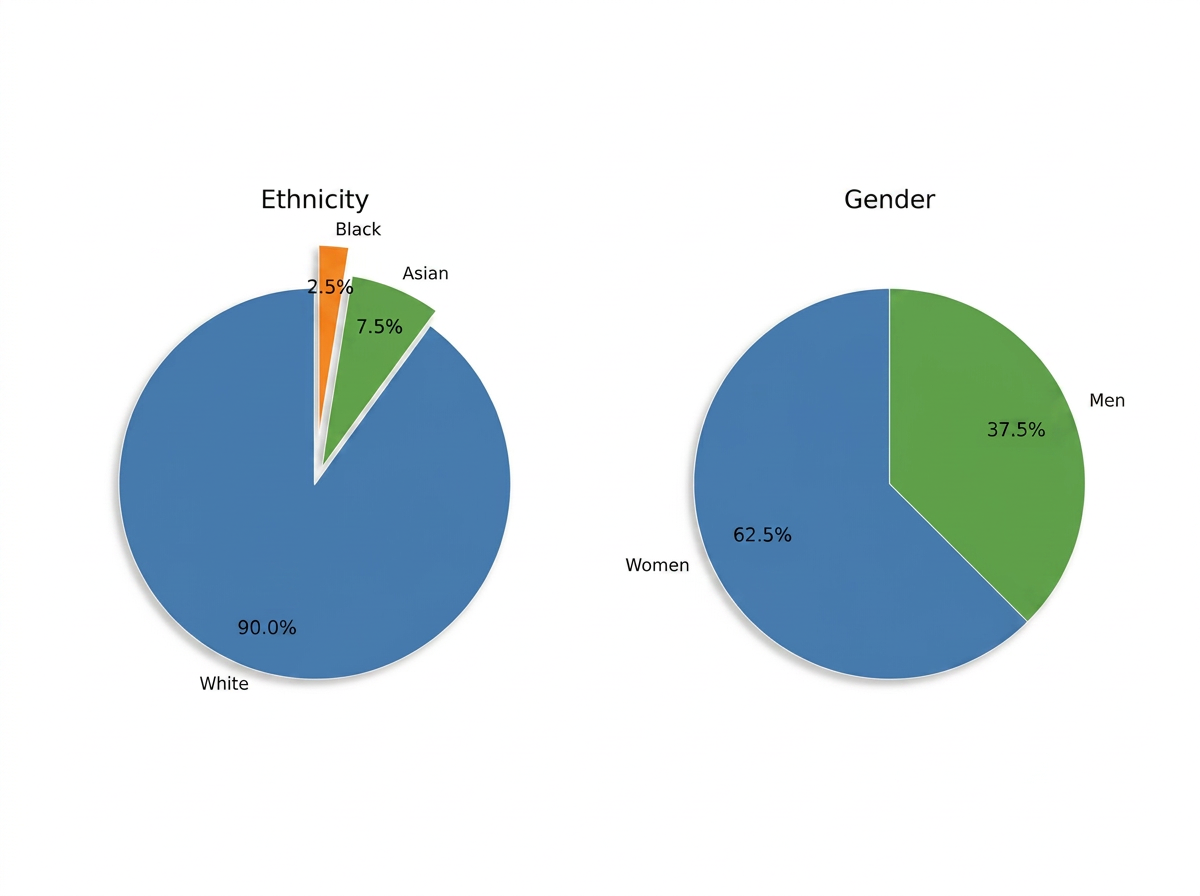
Figure 1. Ethnicity and Gender Characteristics of the Respondents
Their demographics are: White (90%), Asian (7.5%) and Black (2.5%). Women make up 62.5% of the responses, whilst men make up 37.5%. The majority (90%) are aged 25-64 and in full-time employment (60%), unable to work (12.5%), part-time employment (7.5%) and retired (7.5%). 5% are unemployed, but we recognise that this option should not have been captured, as invisible poverty concerns those in work facing specific living-cost hardship. Nevertheless, our data revealed disturbing characteristics of people experiencing hidden hardship. For instance, all respondents have some level of education, with the following distribution: A-levels (35%), undergraduate degree (25%), and postgraduate degree (20%).
This result challenges the longstanding view that education and employment can protect people from poverty. As the results show, the majority of respondents are working full-time, with some part-time, yet they experience hidden hardships. This suggests that employment alone is no longer sufficient to guarantee economic security, which raises questions about the value of education and work.
Patterns of Invisible Deprivation
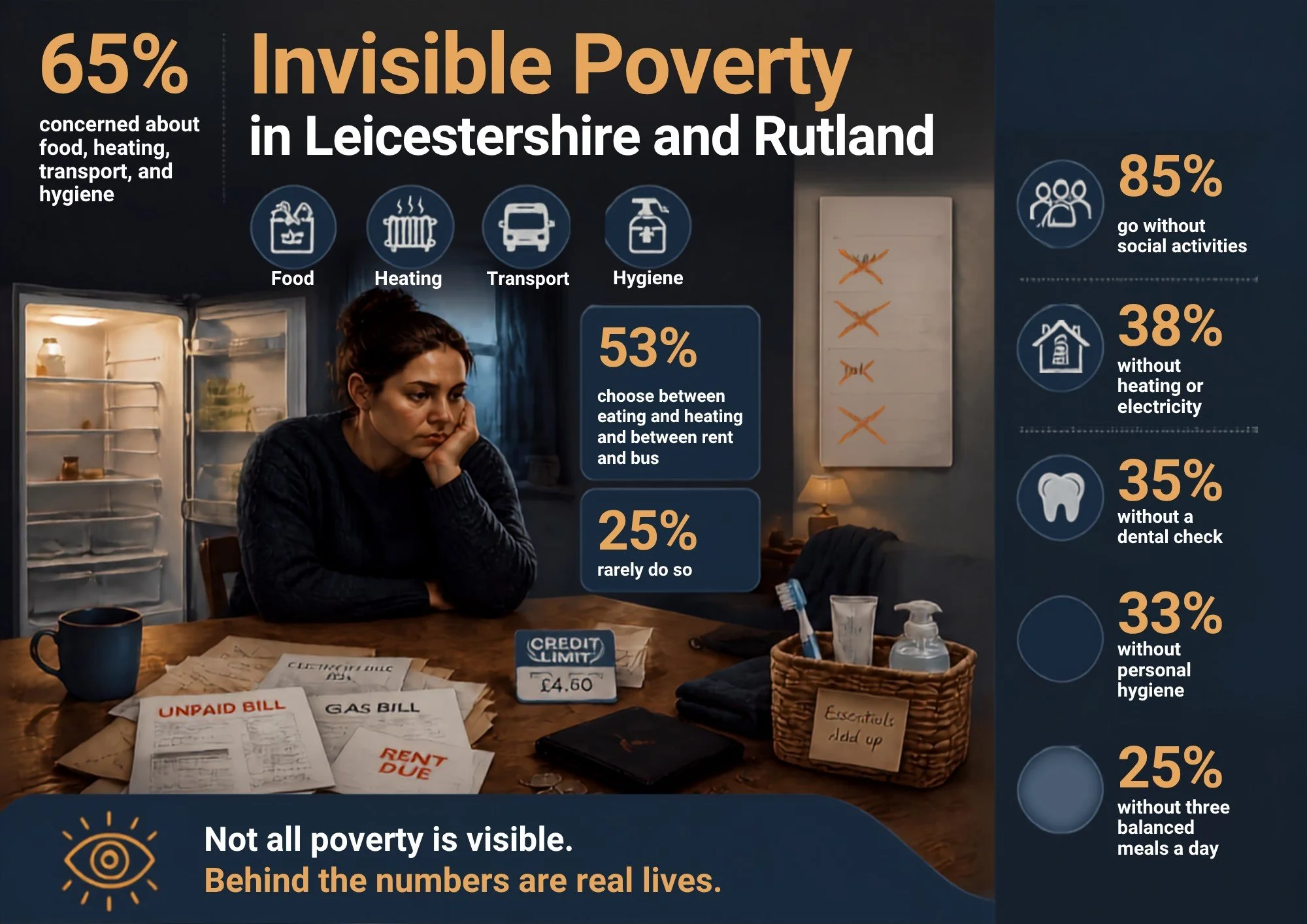
The results expose specific patterns of deprivation in Leicestershire and Rutland. The majority (65%) were often concerned about food, heating, transport, and hygiene (i.e., health matters). As a result, 53% occasionally choose between eating and heating, and between rent and bills, while 25% rarely do so. 65% often delay buying what they need, and 23% sometimes do. 85% go without social activities, 38% without heating or electricity, 35% without a dental check, 33% without personal hygiene and 25% without a three-balanced meal a day.
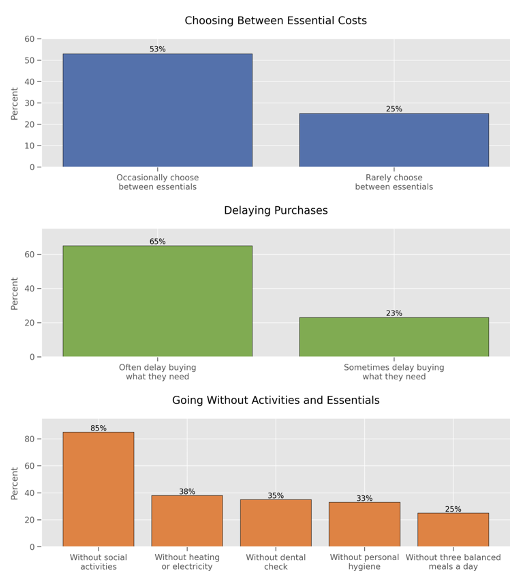
Figure 2. Respondents Choosing Between Essentials
These patterns suggest persistent concern about meeting basic needs, with many forced to trade-off between essential needs such as food and staying warm.
There is also a high level of social exclusion, delayed purchases, food insecurity and forgone healthcare that indicates invisible poverty affects more than material costs. Ultimately, this type of poverty affects people's dignity, social participation, and health. Cui et al.'s (2026) longitudinal study on the impact of social engagement on mental health and wellbeing revealed that higher engagement is positively associated with life satisfaction. Sadly, social disconnection and isolation continue to increase, but Holt-Lundstad's (2024) critical review found that social connection factors predict mental and physical health. Thus, the issue of invisible deprivation should not be ignored or seen as an isolated urban phenomenon. Its implications extend beyond basic needs to broader health and psychological impacts. As such, this matter requires urgent government intervention.
Andy Burnham has set out his priorities as he becomes the new Labour Leader and 7th British Prime Minister in a decade. The themes from the priorities are:
· Greater devolution of power
· Economic growth and reindustrialisation
· Tackling the cost of living
· Education and apprenticeship
· Public transport and public services
· Housing and Taxes
· Social care
· Immigration
· Foreign policy
More details at Reuters and Independent
If the new government is going to tackle the paradox of invisible poverty experienced by many people like the character Inde Jankowski, then it should address stagnant living standards, wage growth that falls behind the cost of living and weak productivity. Specifically, the government should prioritise affordable housing and preventive healthcare measures, such as community clubs with health and fitness activities. Also, investment in further and vocational education to enhance the opportunities for secure employment. Finally, stronger collaboration between central and local government and the third sector is needed. It is through a comprehensive, cross-sector strategy that invisible poverty can be made visible and its symptoms effectively addressed.

For more information about this research, please contact sally.kah@dmu.ac.uk
Authors bios

Dr Sally Kah
Dr Sally Kah is a Senior Lecturer in Business Management at Leicester Castle Business School. Her research is at the intersection of social impact, social enterprise resilience, invisible poverty, and evidence-informed practice. She explores how organisations create, measure, and sustain meaningful change, particularly for individuals and communities experiencing hidden or overlooked forms of disadvantage. Sally is the project lead for the Invisible Poverty Research funded by the Collaboratory Research Hub. She also leads the Social Enterprise Resilience During the Cost-of-Living Crisis funded by De Montfort University. She is a member of the European Council for Small Business and Entrepreneurship and an Associate Editor at Strathmore Africa Case Centre

Dr Ming Lim
Dr Ming Lim (PhD, MPhil, MA, BA, FHEA) is an established researcher whose career has focused on the impacts of emerging technologies upon social marketing, consumer culture and the global branding and adoption of sustainability programmes and Net Zero. Her current research on sustainability advertising and marketing in multinational contexts builds upon published work on underprivileged and emerging economic actors in healthcare, heritage preservation, and luxury fashion retail. Her research appears in leading journals such as Industrial Marketing Management, Journal of Business Ethics, Journal of Macromarketing and Luxury Studies. She has been awarded over £950,000 in external funding from the AHRC/ESRC, NIHR, Health England, the Living Wage Foundation and the Precision Medicine Institute as well as Knowledge Transfer Partnerships across Leicestershire and Rutland. Prior to joining DMU, Ming held senior positions at the Universities of Leicester and Liverpool.

Dr Dave Cliffe
Dr Dave Cliffe is a Manager at Voluntary Action LeicesterShire (VAL), a charity supporting communities and the voluntary, community and social enterprise sector across Leicester and Leicestershire. He has extensive experience working with communities, voluntary organisations and public sector partners to address local challenges, strengthen community capacity and improve opportunities for people facing disadvantage. Through his work at VAL, he supports projects focused on volunteering, employability, community development and social impact, with a particular interest in ensuring that lived experience and local voices help shape responses to poverty and inequality.

Dr. Navajyoti Samanta
Dr. Navajyoti Samanta is an associate professor in law at the University of Leicester. He researches public policy impact, specialising in quantitative methods.
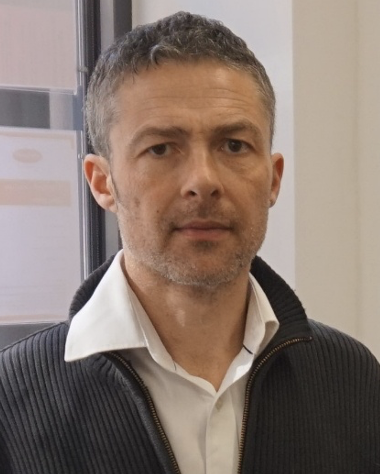
Chris Hill
Chris Hill is a social entrepreneur, leading a local social enterprise in Leicester, Leicestershire and Rutland (LLR) which provides much needed respite for Carers. Chris grew up in an outer City estate in Leicester, experiencing in work poverty first hand, and still lives in the County. Chris's work has included supporting disadvantaged communities address economic and social challenges through providing support to many other social entrepreneurs. Chris's interests include looking at the solutions to poverty across LLR, and especially at invisible poverty.